

Blog
Sympathy Flower Etiquette: What to Send, When, and What to Write

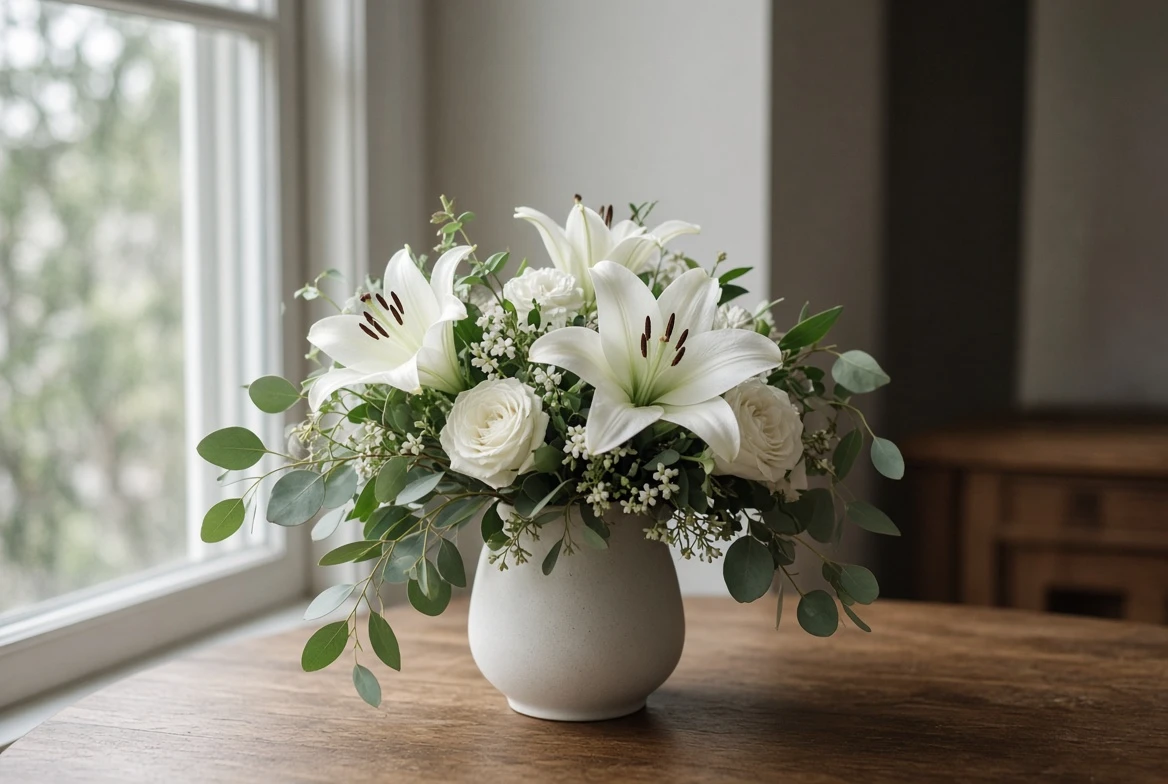
When someone you know loses a person they love, it is hard to know what to say. Flowers have long been one way to show support when words feel inadequate. But sympathy flowers come with questions that most of us only face a few times in our lives. Where should they go? What is appropriate to send? How soon? And what on earth do you write on the card?
This guide answers those questions simply and respectfully, so you can focus on what matters: letting someone know you are thinking of them.
Sympathy Flowers vs Funeral Flowers: What Is the Difference?
The two terms are often used interchangeably, but they serve different purposes.
- Funeral flowers are sent to the funeral home, church or venue for the service. They include standing sprays, wreaths, casket pieces and larger arrangements. They are usually sent by close family, a group of friends or an organization.
- Sympathy flowers are sent to the family’s home, or to the person grieving. They are more personal, often a vase arrangement, a basket or a plant. Anyone can send them, at any time.
If you are not part of the immediate family, sympathy flowers sent to the home are often the more thoughtful choice. They reach the person directly, and they can be enjoyed long after the service.
Where to Send Sympathy Flowers
To the family’s home
This is the most common choice for friends, colleagues and neighbours. Flowers at home are a quiet reminder that people care, especially in the days and weeks after the service, when support often fades.
To the funeral home or service
If you would like your flowers to be part of the service, send them to the funeral home or venue. Always include the name of the person who passed, the date and time of the service, and the family’s name on the order. Plan for delivery several hours before the service begins.
To a workplace
If a colleague has lost someone, a team may send flowers to their home or, once they return, place a gentle arrangement on their desk. Ask first. Some people prefer privacy at work.
We deliver sympathy flowers to homes, condos, funeral homes and workplaces across Downtown Vancouver and the City of Vancouver. For tips on delivering to buildings with concierge desks or restricted access, see our guide to sending flowers to Downtown Vancouver condos, offices and hospitals.
When to Send Sympathy Flowers
There is no wrong time to show you care, but timing does shape how a gift is received.
- In the first few days: flowers to the home show immediate support. Same-day delivery in Downtown Vancouver is available for orders placed before 1 pm.
- For the service: order at least a day ahead so the funeral home receives them in time.
- Weeks after the loss: often the most meaningful moment. The visitors have gone home and the house is quiet. A late arrangement says “I have not forgotten.”
- On anniversaries and first holidays: a first birthday, Mother’s Day or Christmas without someone can be especially hard. Flowers on those dates are deeply appreciated.
What Flowers to Send for Sympathy
Soft, calm and elegant designs are almost always appropriate. Some flowers carry traditional meanings in sympathy arrangements:
- White lilies are among the most recognized funeral flowers and symbolize peace and the restored innocence of the soul. Note that lilies have a strong scent and are toxic to cats, so choose something else if the family has pets.
- White roses express reverence and remembrance. Soft pink or cream roses suggest love and gratitude.
- Chrysanthemums are associated with grief and honour in many cultures, especially in white or yellow.
- Orchids are elegant, long-lasting and suit a home well. A potted orchid can bloom for weeks.
- Hydrangeas feel full and comforting, and their soft blues and whites are naturally calming.
- Carnations are long-lasting and gentle, and white carnations are a traditional symbol of remembrance.
Colours matter more than specific varieties. Whites, creams, soft greens, blush and pale blues are classic choices. Bright, celebratory colours are usually better saved for another occasion unless you know the family would welcome them, for example if the person who passed loved a particular flower or colour.
You can browse our arrangements for this moment in our sympathy flowers collection.
Flowers or a Plant?
Both are thoughtful. Fresh arrangements bring immediate comfort and beauty. Plants, such as orchids, peace lilies or other green plants, last for months or years, and some families keep them as a living memory of the person they lost. If you are unsure, a plant is a good choice for a close friend, while a vase arrangement suits colleagues and acquaintances.
Cultural and Religious Considerations
Vancouver is home to many cultures and faiths, and traditions around death differ widely. When in doubt, it is always respectful to ask a family member or check the service notice. Some general guidance:
- Christian traditions generally welcome flowers at the service and at home.
- Jewish traditions do not typically include flowers at funerals or during shiva. A donation, food for the family or a card is often preferred.
- Muslim traditions vary by family and community. Simple gestures, food and condolence visits are common, and some families prefer no flowers.
- Chinese traditions often use white and yellow flowers, especially chrysanthemums. Red is associated with celebration and is usually avoided.
- Hindu traditions may use garlands and white flowers. Many families welcome flowers, but practices differ.
Many obituaries now say “in lieu of flowers, please donate to…”. If so, honour that wish. You can still send a card, or send flowers to the home a few weeks later if you know the family well.
What to Write on a Sympathy Card
This is the part most people find hardest. The good news is that the card does not need to be long or perfect. Sincere and short is always better than elaborate.
Simple messages
- “With deepest sympathy.”
- “Thinking of you and your family.”
- “Holding you close in our thoughts.”
- “With love and heartfelt condolences.”
Personal messages
- “I am so sorry for your loss. Your mom was one of the kindest people I have known.”
- “Remembering David with so much love. He will be deeply missed.”
- “There are no words, only love. I am here for you, today and always.”
From a workplace or team
- “With heartfelt sympathy from all of us at the office. We are thinking of you.”
- “Our thoughts are with you and your family. Take all the time you need.”
What to avoid
- Phrases that minimize the loss, such as “they are in a better place” or “everything happens for a reason”, unless you know they match the family’s beliefs.
- Comparing their loss to your own experiences.
- Asking questions about how the person died.
If you knew the person who passed, a short memory or a single word that describes them is one of the most comforting things you can write.
Sympathy Flower Etiquette: Quick Do’s and Don’ts
- Do include your full name on the card. Grieving families often receive many gifts and keep a list to thank people later.
- Do check the obituary or service notice for flower wishes or a funeral home address.
- Do follow up weeks later with a message, a call or a second arrangement.
- Don’t expect a thank-you note quickly, or at all.
- Don’t send strongly scented flowers to a compact apartment or hospital room.
- Don’t worry about choosing the “perfect” design. The gesture matters far more than the flowers.
How Much Should You Spend?
There is no expected amount. Close family and organizations often send larger arrangements for the service, while friends and colleagues usually send a vase arrangement or plant to the home. A group of colleagues or friends can combine their budgets for one meaningful arrangement. Our minimum order is $40 per delivery.
Ordering Sympathy Flowers in Vancouver
When you order, have these details ready:
- The recipient’s full name and address, including suite number and buzzer code for condos.
- For a funeral home: the name of the person who passed, the service date and time, and the family name.
- A phone number for the recipient or the funeral home.
- Your card message and your full name.
If you are not sure what to choose, our florists are happy to help you find something that feels right.
Frequently Asked Questions
Is it appropriate to send flowers to the family’s home?
Yes. Sympathy flowers sent to the home are one of the most common and welcome ways to express condolences, for friends, colleagues and neighbours alike.
How soon should I send sympathy flowers?
Any time is appropriate. Many people send flowers within the first few days, but arrangements sent weeks later are often especially meaningful, once the initial support has faded.
What colour flowers are best for sympathy?
White, cream, soft pink, pale blue and green are classic choices. They feel calm and respectful. Brighter colours can be appropriate if they reflect the personality of the person who passed.
Can I send flowers if the obituary says “in lieu of flowers”?
It is best to honour the family’s wish and make a donation instead. You can still send a card, or flowers to the home later if you know the family well.
Do you offer same-day sympathy flower delivery in Vancouver?
Yes. Same-day delivery is available in Downtown Vancouver for orders placed before 1 pm, and we deliver across the City of Vancouver.
What should I write on a sympathy card if I did not know the person?
Keep it simple and focused on the person grieving, for example “Thinking of you and your family during this difficult time.”
VanCentral Florist is a women-owned flower studio in Downtown Vancouver. We create calm, elegant sympathy arrangements with care, and deliver them across the city when they are needed most.
